What Makes a Primary Bathroom Worth Lingering In?
A primary bathroom can be one of the most expensive rooms in a house to renovate. It’s also one of the easiest places to spend money on features that look impressive but contribute surprisingly little to everyday comfort.
Consider the oversized soaking tub that rarely gets used. The double vanity with inadequate storage. The dramatic shower that leaves its owner reaching awkwardly for the controls.
These aren’t necessarily poor design choices. They’re reminders that a successful bathroom renovation depends on understanding how the room will actually be used.
For homeowners considering bathroom remodeling on Cape Cod, that understanding can shape everything from the floor plan and fixture selection to the construction details hidden behind the finished walls.
A bathroom’s square footage tells you surprisingly little about how comfortable it will be.
Two people may share a generous primary bathroom and still find themselves negotiating for space every morning. A vanity drawer blocks the path to the shower. The bathroom door opens directly into someone’s dressing area. Towels are stored several steps from where they’re needed.
These aren’t glamorous problems, but solving them can make a greater difference than adding another few feet to the room.
A well-planned bathroom considers clearances, door swings, storage, and the relationship between fixtures. Sometimes that means two sinks. Sometimes it means one generous vanity with better cabinetry and more usable counter space.
The objective is to make the room work without requiring its occupants to work around it.
A beautifully tiled shower is easy to admire. What makes it satisfying to use is often less obvious.
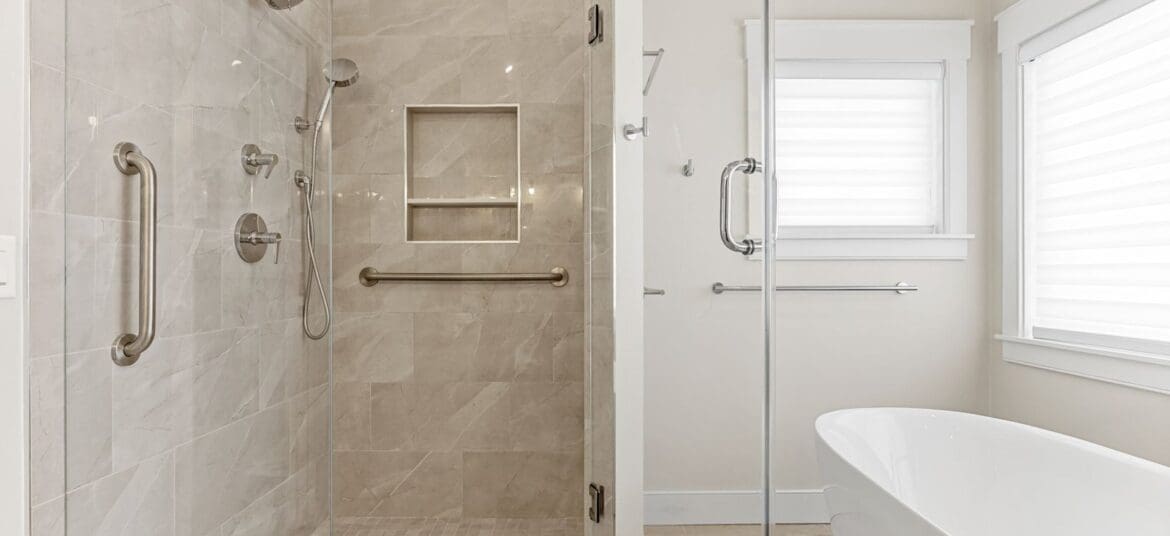
Consider where the controls are positioned. Can the water be turned on without stepping into a cold spray? Is there enough room to move comfortably? Is the bench positioned for actual use, or was it included simply because the design called for one?
A curbless entrance can create a clean architectural transition and improve accessibility. A recessed niche keeps bathing essentials within reach without interrupting the tilework.
Behind those details are decisions that demand precision.
The floor must slope correctly toward the drain. Waterproofing needs to be continuous. Plumbing, framing, and glass placement must be coordinated before the finished surfaces are installed.
For Pav Construction, this is where construction expertise becomes inseparable from good design. A shower that looks effortless requires considerable work to make it function that way.
A bathroom places unusual demands on its finishes.
Stone, porcelain, wood, glass, and metal may all have a place in the design, but each responds differently to moisture, cleaning, and everyday use.
Natural stone offers distinctive character, although some varieties require more maintenance than homeowners anticipate. Porcelain can provide a similar visual effect with different care requirements. Wood cabinetry introduces warmth, but proper ventilation and appropriate finishes are essential.
Even tile size deserves a practical discussion. Large-format tile can create broad, uninterrupted surfaces, while smaller tiles may be better suited to certain shower-floor configurations.
The goal isn’t to select the most expensive material in every category. It’s to understand where each material will perform best.
That consideration is especially relevant to Cape Cod properties that may experience periods of seasonal occupancy or fluctuating indoor humidity.
Think about how many different activities take place in a primary bathroom.
Shaving or applying makeup requires clear, balanced illumination. A shower needs sufficient light for safety and visibility. An evening bath may call for something considerably softer.
One dramatic fixture rarely handles all three particularly well.
A layered lighting plan can combine illumination at the vanity with appropriately located ceiling fixtures and separate controls for softer light.
Daylight presents another opportunity, particularly when the architecture allows for a well-positioned window. Privacy, exterior elevations, and available wall space all influence that decision.
Lighting deserves attention while the electrical plan is being developed, not after the tile and cabinetry have been chosen.
There are bathroom upgrades that rarely appear in the photographs but make a considerable difference once the room is occupied.
Radiant floor heating is one. Effective ventilation is another.
Insulation, air sealing, and properly designed mechanical systems influence whether the room feels comfortable and manages moisture effectively.
In an existing home, incorporating these improvements may involve work beneath the subfloor, inside exterior walls, or within areas that were never designed to accommodate modern equipment.
This is where the realities of renovation deserve as much attention as the design.
Pav’s experience with substantial residential projects helps homeowners evaluate what their existing house can accommodate and how the construction should be planned to support the finished room.
It’s worth asking whether the features that impress us in photographs are the same ones we’ll appreciate five years after a renovation.
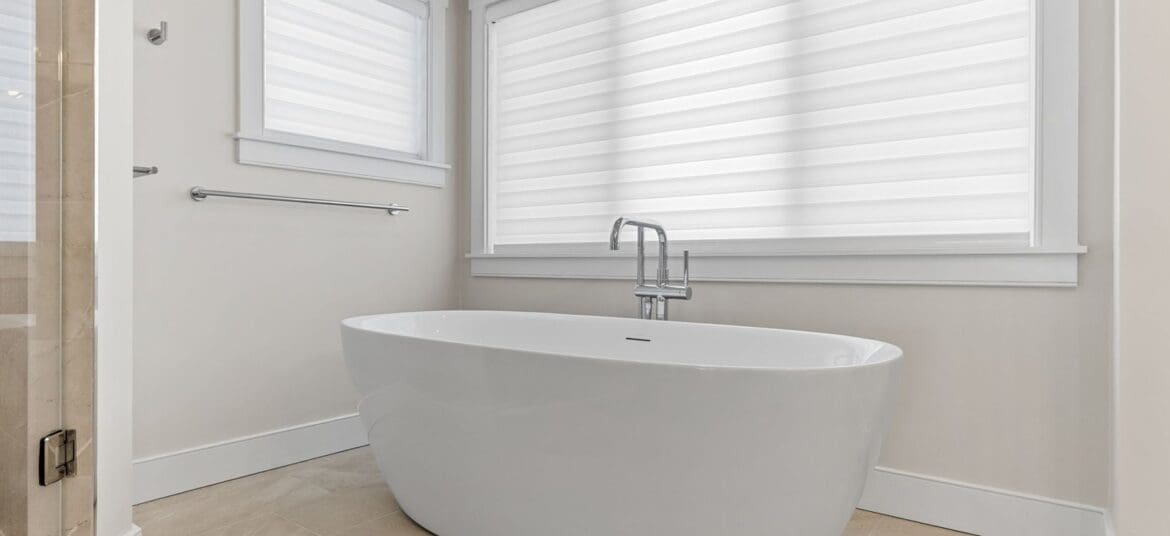
A freestanding tub can be wonderful for someone who uses it regularly. A generous shower may be a better investment for someone who doesn’t.
An elaborate vanity isn’t necessarily an improvement over one with accessible storage and adequate counter space. A dramatic light fixture may be less valuable than illumination that works well at every hour.
The most successful bathroom renovations reflect the people who use them, rather than a checklist of fashionable features.
And perhaps that’s the real luxury: a room where everything works so naturally that there’s no reason to hurry through it.
Considering a bathroom renovation on Cape Cod? Connect with Pav Construction — click here to get started.

Pav Construction, LLC is a family-owned, design-build firm specializing in luxury custom home construction, high-end home additions, and full-scale renovations throughout Cape Cod, Massachusetts.
Copyright © 2026 Pav Construction, LLC