
A well-designed addition can give a Cape Cod home more room to live while allowing its original character to continue shaping the story.
There are homes you outgrow. And then there are homes you simply want to keep growing with.
Perhaps the house has become the place where grown children return with families of their own. Summer weekends now mean more overnight guests. A kitchen that once served beautifully could benefit from a family room beside it. Or the first-floor plan may be ready for a private primary suite that makes the house as comfortable in the years ahead as it is today.
For homeowners considering home additions in Barnstable, Massachusetts, the most compelling question is rarely how much square footage can be added.
It is what new space could make possible.
That is where a successful addition begins.
An addition may appear on an architectural plan as new square footage, but homeowners experience it very differently.
They experience the breakfast table that finally has enough room when everyone is home. The doors that open from a new family room onto the terrace. A quiet bedroom away from the busiest part of the house. A mudroom that gives sandy shoes, beach bags and tennis racquets a natural place to land.
These everyday moments are often the best starting point for design.
Before deciding where an addition should go or how large it should be, consider how the house lives now. Where does everyone naturally gather? Which rooms are used constantly? Where would a little more space change the rhythm of the day?
The answers can reveal possibilities that square footage alone cannot.
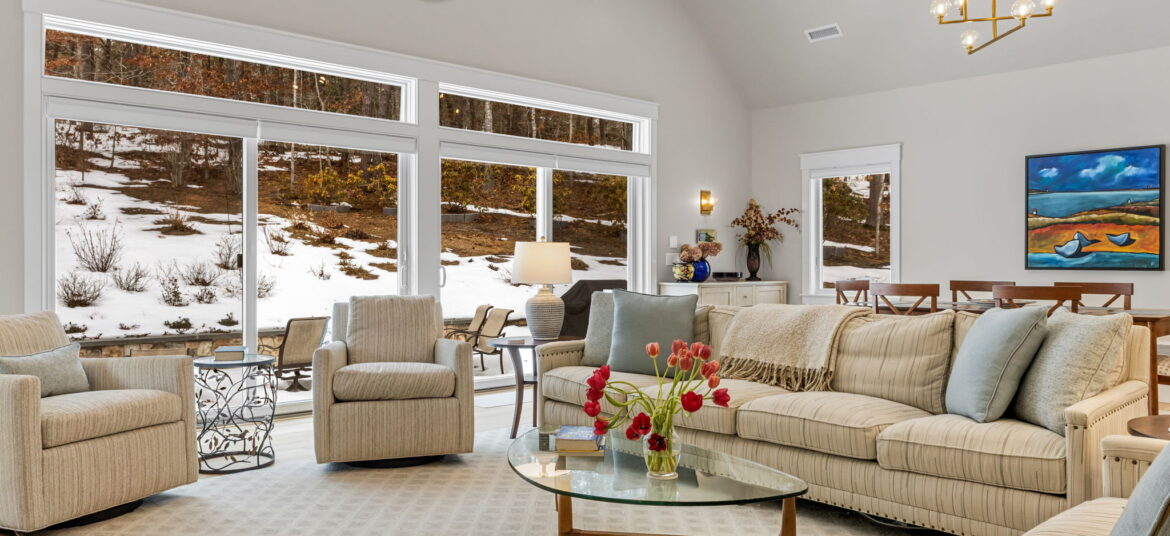
Cape Cod houses have a wonderful way of becoming gathering places.
A home purchased when children were young may eventually welcome adult children, spouses, grandchildren and friends. A summer house that once accommodated one family may become the center of a much larger one.
An addition can allow the house to evolve with that life.
A generous family room beside the kitchen can create a natural place for everyone to settle in together. A guest suite can give visitors privacy while keeping them connected to the household. Additional bedrooms can make long weekends feel gracious rather than crowded.
The objective is larger than accommodating more people.
It is creating a home where being together feels easy.
That distinction can shape everything from room proportions to circulation. A gathering room should relate naturally to the kitchen. Guest rooms should feel welcoming and considered. Hallways, stairs and transitions should make movement through the expanded home intuitive.
The addition becomes part of the way hospitality is built into the house.
Some of the most valuable additions transform ordinary days.
A mudroom can change the experience of arriving home. A pantry can give the kitchen more visual calm and useful storage. A home office can create separation between work and living spaces. A first-floor primary suite can introduce privacy and convenience while becoming a beautiful retreat of its own.
For homeowners exploring home additions on Cape Cod, these spaces can be especially meaningful because Cape houses often live differently throughout the year.
A quiet home in January may become a lively gathering place in July. Beach towels multiply. Friends stop by. Doors remain open to the outdoors. Meals become larger and schedules become wonderfully informal.
The architecture can support both versions of the house.
Rather than designing solely for the busiest week of summer or the quietest winter morning, a well-planned addition can create flexibility for both.
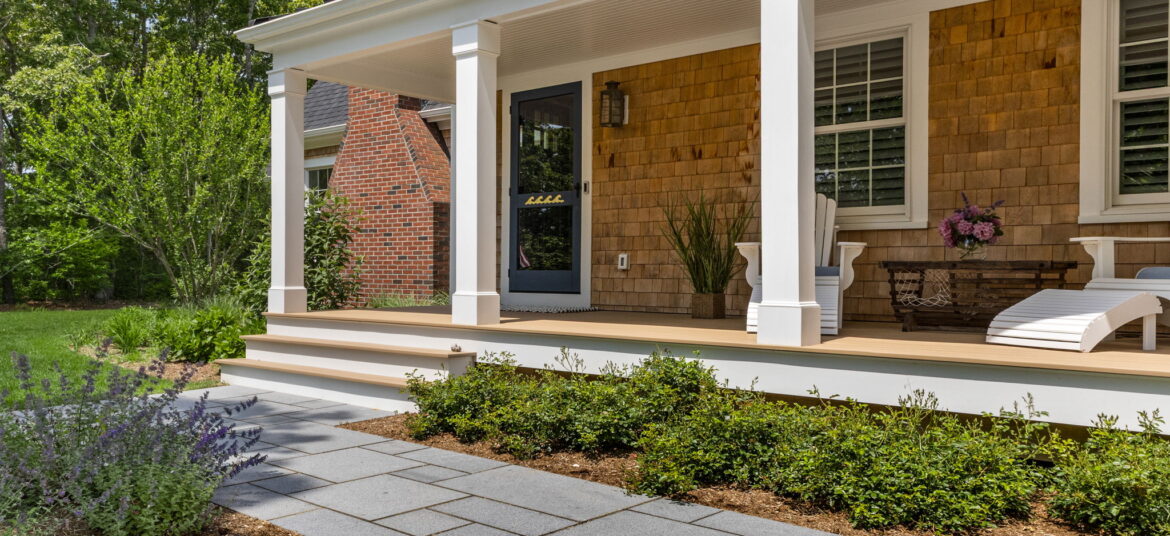
On Cape Cod, adding to a home also creates an opportunity to reconsider its relationship with the landscape.
A new family room might introduce French doors to a terrace. An expanded kitchen could gain windows overlooking the garden. A screened porch might create an outdoor room protected from the elements. A new primary suite could open toward a private patio.
These connections can make an addition feel larger than its dimensions.
Natural light changes throughout the day. Views become part of the interior composition. The landscape begins to influence how rooms are arranged and where people naturally gravitate.
This is one reason window and door placement deserves the same attention as cabinetry, flooring or millwork.
A beautifully positioned opening can change the experience of an entire room.
And when the architecture frames the landscape well, the Cape itself becomes part of the design.
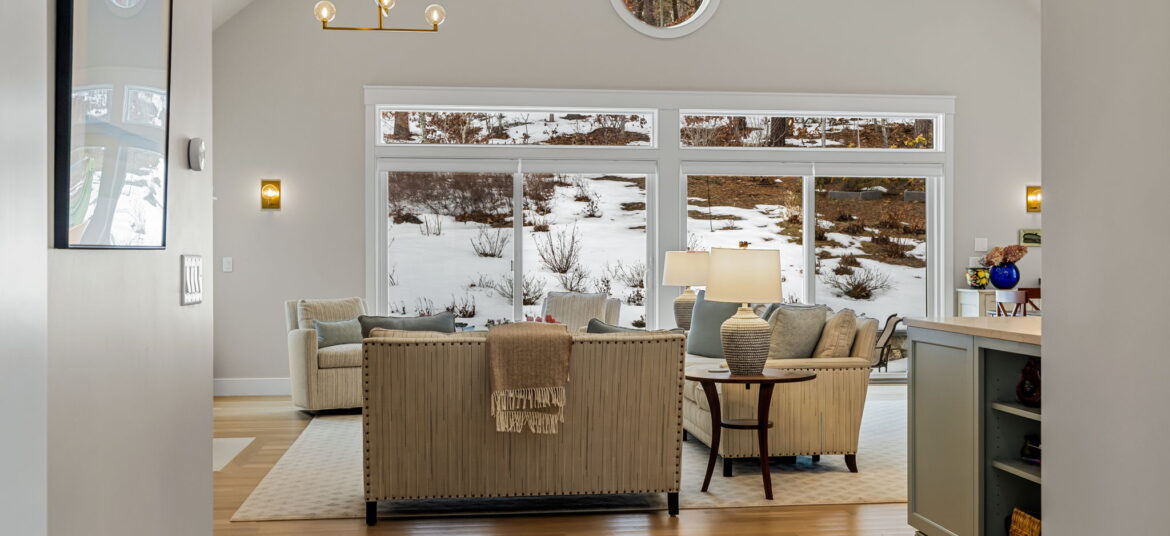
One of the most important architectural decisions in any addition is how the new portion of the house relates to what is already there.
The original home provides clues.
Its rooflines. Window proportions. Exterior materials. Trim. Ceiling heights. Millwork. The scale and rhythm of its rooms.
A successful addition can draw from those elements while creating spaces suited to contemporary life.
This becomes especially important in communities such as Barnstable, where homes may represent many architectural periods and styles. The goal is to understand what gives a particular house its identity and allow that character to inform the new work.
Sometimes continuity comes through exterior proportions and materials.
Inside, it may be carried through flooring, millwork, ceiling details or the way one room transitions into another.
The new space can feel fresh while remaining connected to the architecture that made the homeowner love the house in the first place.
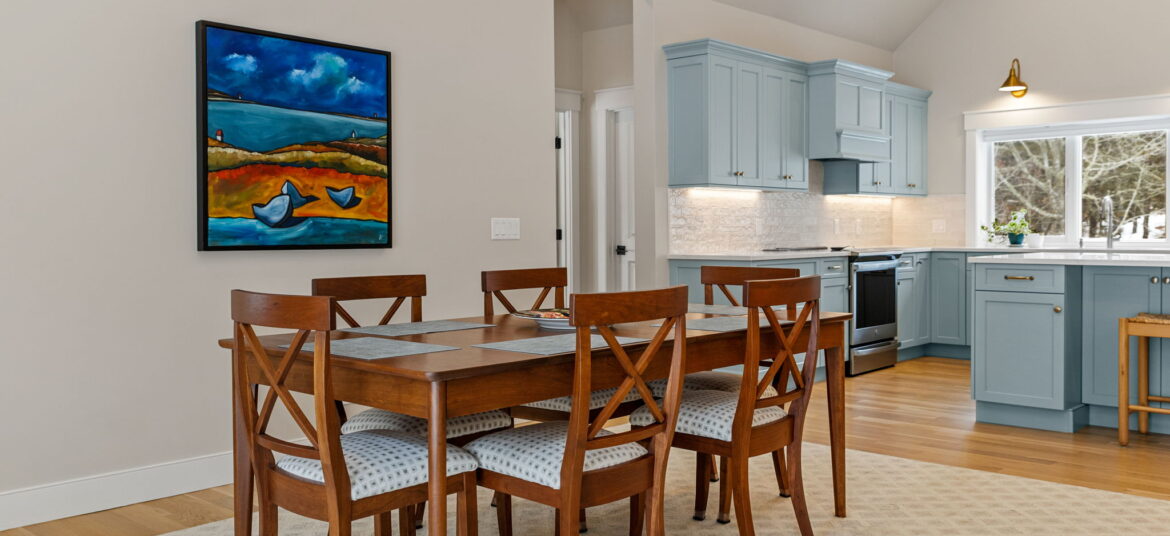
An addition can also create opportunities within the existing home.
A new family room may allow an older living room to become a quieter space for conversation. Adding a primary suite could free an upstairs bedroom for guests. A new mudroom may improve the entry sequence and give the kitchen more usable space.
This is where the design-build perspective becomes especially valuable.
Rather than considering the addition as a box attached to the existing structure, the design can examine how the entire floor plan might benefit from the change.
Where should circulation shift?
Could an existing doorway be repositioned?
Would the kitchen function better if an adjacent room took on a new purpose?
Could natural light reach farther into the original house?
One new space can sometimes improve several others.
The result is an addition that feels integrated into the home rather than simply added to it.
The best additions answer today’s needs while anticipating how life may continue to change.
For some homeowners, that means creating a first-floor suite that offers greater flexibility over time. For others, it means accommodating a growing family or creating enough guest space for the next generation.
And for homeowners whose primary residence is in Boston, New Bedford, Providence or elsewhere, a Cape house may gradually become a place where they spend longer stretches of the year.
That evolution can influence the design.
Storage becomes more important. A home office may become useful. Four-season living spaces take on greater significance. The distinction between summer house and simply home begins to soften.
Planning for those possibilities does not mean predicting exactly what life will look like years from now.
It means creating architecture with enough grace and flexibility to adapt.
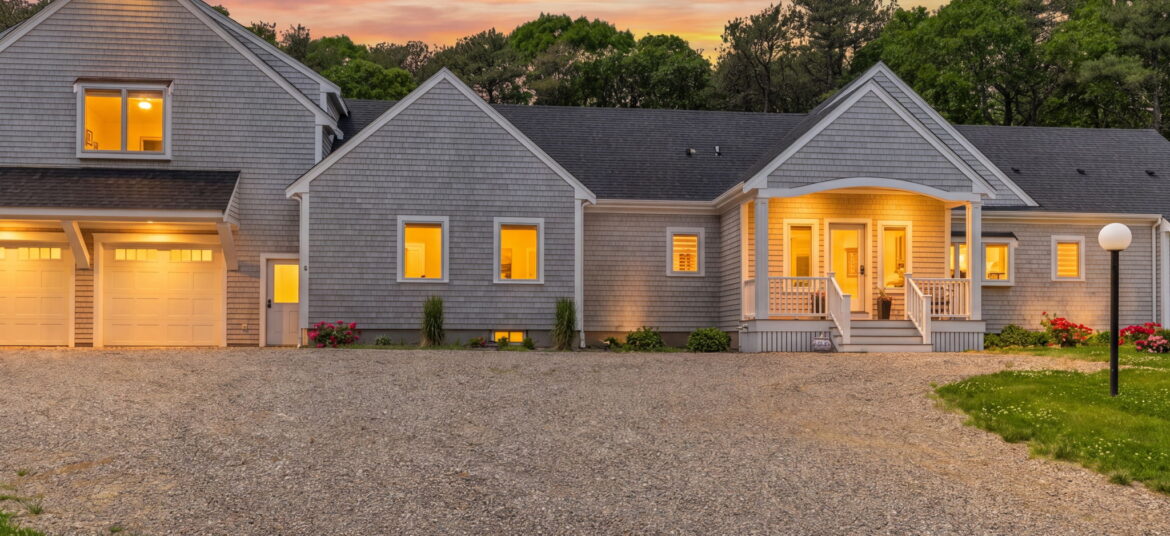
A home addition changes more than the floor plan.
It changes the architecture as a whole.
From the street, garden or approach to the house, the new volume becomes part of the composition. Its roofline, windows, siding and proportions contribute to the home’s presence.
This is particularly important on Cape Cod, where the scale of a house and its relationship to its setting can be central to its appeal.
A successful addition should look considered from every direction.
Perhaps a new wing balances the original structure. A porch creates a more gracious transition to the landscape. A roofline gives the expanded house a stronger silhouette.
These are architectural decisions, but they also influence something less tangible:
whether the house still feels like itself.
Before construction begins, a home addition requires careful planning.
The design must respond to the existing structure, the site and the homeowner’s goals. Depending on the project and property, zoning requirements, setbacks, permitting and other local considerations may also shape what is possible.
Addressing those factors early allows the design to develop within a clear framework.
For a homeowner, this is where working with an experienced design-build firm on Cape Cod can bring the architectural and construction conversations together from the beginning.
The addition can be considered not only as a design idea, but as part of the complete home: how it will be built, how materials will connect, how the existing structure will be affected and how each decision contributes to the finished result.
The most successful home additions in Barnstable, Massachusetts can feel almost inevitable when they are complete.
The house is larger, yet its proportions still make sense.
There are new rooms, yet moving between old and new feels natural.
The architecture has evolved, but the qualities that made the home special are still there.
And perhaps most importantly, there is now room for whatever comes next.
More family around the table.
Longer summers on the Cape.
Quiet mornings overlooking the garden.
Grandchildren racing through rooms their parents once knew differently.
At Pav Construction, home additions begin by looking closely at the house that already exists – and listening to what homeowners want the next chapter of life there to hold. Through an integrated design-build process, those ideas can become architecture that feels connected to the home, the setting and the people who live there.
Because sometimes the right home is already yours.
It simply needs room for the story to continue.
If you’re considering an addition to your home on Cape Cod and would like to explore what comes next, click here to get started.

Pav Construction, LLC is a family-owned, design-build firm specializing in luxury custom home construction, high-end home additions, and full-scale renovations throughout Cape Cod, Massachusetts.
Copyright © 2026 Pav Construction, LLC